GEM420: What a Router Name, a Cloth Cat and a Nursery Rhyme Taught Me About Language
By Nick Appleby3 March 202610 min read
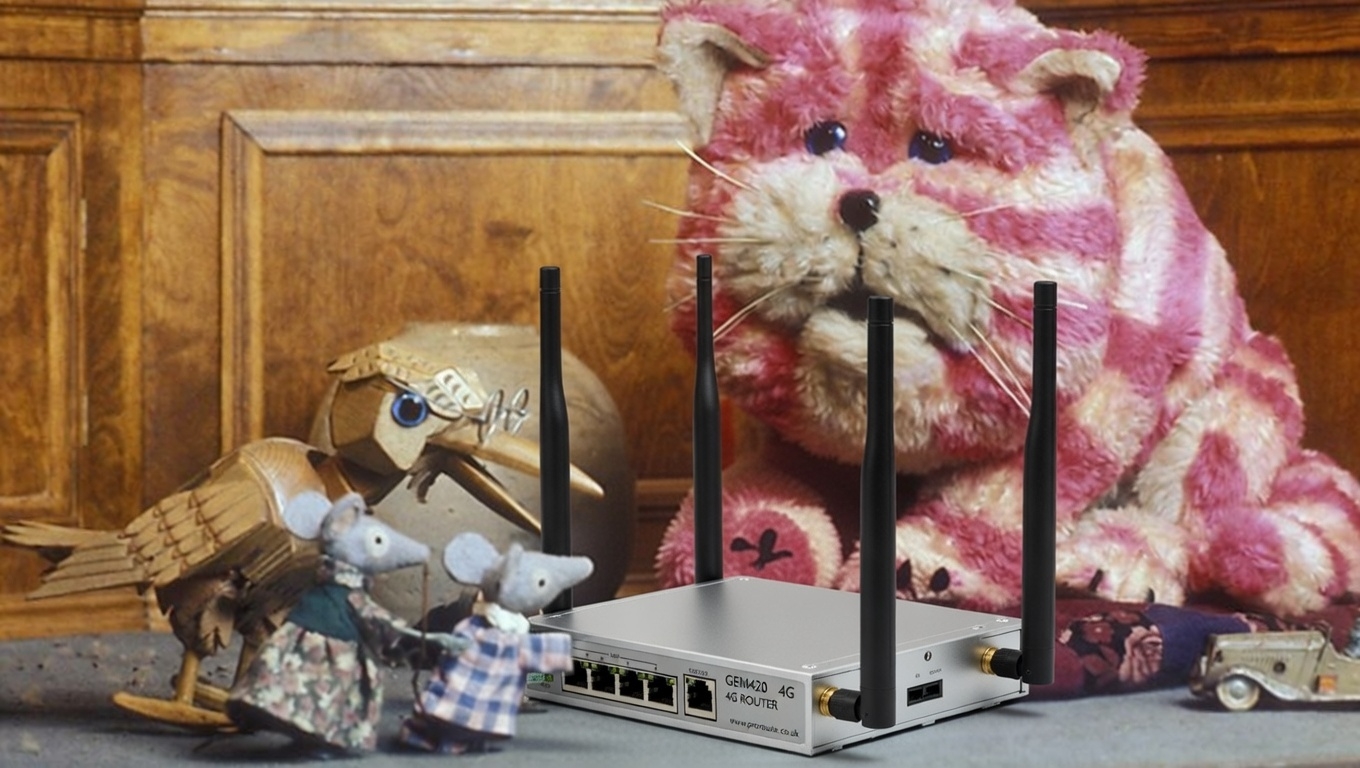
I was watching Bagpuss with my daughter last week. If you’re not familiar with the 1974 BBC series, it’s a beautifully gentle thing – a saggy old cloth cat who brings lost and broken objects back to life in a small girl’s shop window. In the episode we watched, the mice on the mending machine sing a song about four and twenty sailors – prompted by a ship they’ve found in a bottle, crewed by tiny carved figures who need rescuing.
Four and twenty sailors.
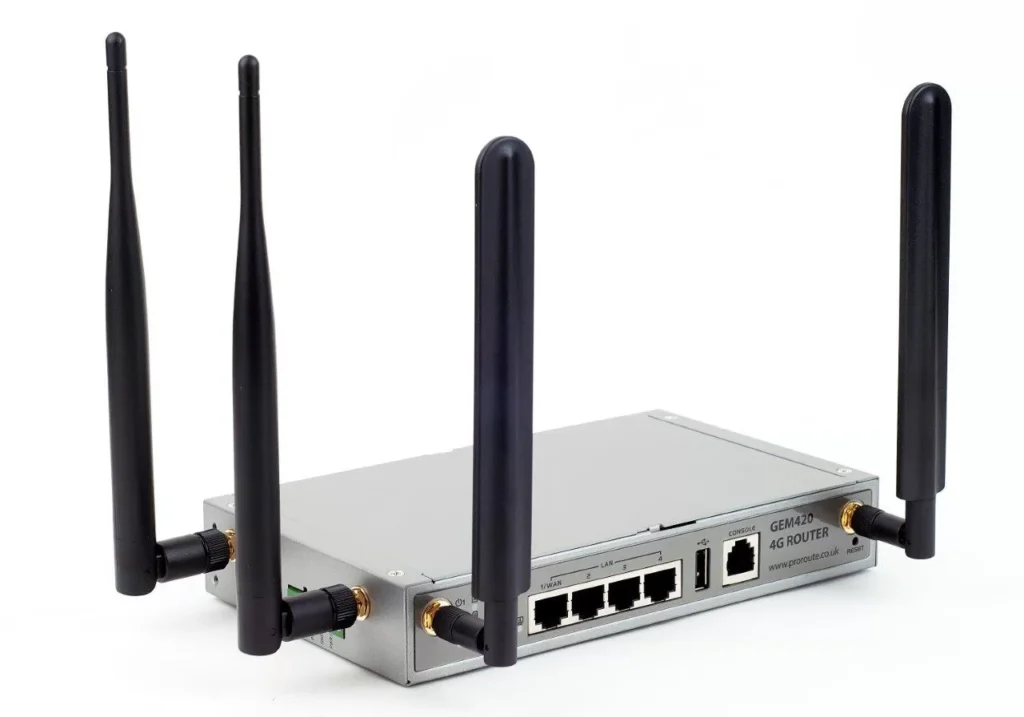
I created a product called the GEM420. It was a 4G router with two SIM slots. The name was entirely logical – 4G, two SIMs, hence 420. A clean, honest encoding of what the device actually did, compressed into three digits. And then some Letters to make it more rounded and the only thing that sounded right to me was GEM, GEM420. It just popped into my head and just felt right.
And yet. Four and twenty. The number already lived somewhere in my head, in the same place nursery rhymes live – absorbed young, never quite shifted. Whether that played any part in why 420 felt right when I was sitting there naming a cellular router, I genuinely can’t say. I didn’t think about it at the time. It just sounded right.
That’s an interesting thing to sit with. Because “it sounds right” is either a shortcut or a skill, depending on how much you actually know about the thing you’re doing.
How a name sounds is not a soft consideration
Say it out loud. GEM four-twenty.
Hard G. Clean M. Then the rhythm of four-twenty, which lands with a kind of completeness that shorter or longer numbers don’t quite manage. It feels finished. It doesn’t trail off and it doesn’t overstay. That matters more than people in technical industries usually want to admit, because the instinct is to treat naming as a rational exercise – encode the specs, assign the SKU, move on.
But language works on you before you’ve had time to think about it. The sound of a name creates an impression before the meaning registers. Cadence, syllable weight, the way consonants land – these things determine whether a product name feels solid or flimsy, confident or hesitant, worth remembering or immediately forgettable.
GEM420 works sonically in a way that XR2000 or CAT19-X simply don’t. Not because of any single element, but because of how they combine. GEM carries weight – compact, complete, something precise and valuable. The number follows cleanly. The whole thing feels like a product with identity rather than a reference code with a chassis attached.
Numbers aren’t neutral
420 is doing more than encoding a specification. It’s a number with unusual cultural density – and that density operates whether you’re conscious of it or not.
Four and twenty appears in Sing a Song of Sixpence, in sea shanties, in centuries of English verse. It’s an archaic construction we no longer use in everyday speech, which is precisely why it survived in song – the rhythm preserved it. So there’s an old familiarity to the number that lives somewhere below conscious recognition.
There’s also the more modern familiarity – because 420 has been the internationally recognised slang term for cannabis culture since at least the 1970s, origin disputed but ubiquity not. It carries a faint edge. Not something you’d necessarily lean into when selling hardened industrial routers to local authority procurement managers – they are not, as a rule, celebrated for their appreciation of subculture. But for anyone building their own brand with a degree of personality, a number that has attitude is not a liability. It’s texture.
And then there’s the visual. 4, 2, 0. Descending structure. Strong, narrow, round. It reads cleanly on a chassis label, on a PCB silk screen, on a product box. Engineers don’t always admit how much visual aesthetics influence naming decisions. But they do.
The result is a number that sits in four different registers at once – nursery rhyme rhythm, cultural subtext, visual balance, and a direct rational encoding of the product specification. You could have called it the GEM421 or the GEM418. It wouldn’t have felt the same. 420 has been reinforced through too many different channels for it to feel arbitrary. It feels chosen, even when it wasn’t entirely.
That’s why it sticks.
The name that stayed with me
I launched ProRoute in 2012 as a brand for M2M 3G routers – Pro for professional credibility, Route for function, no jargon required. It didn’t need explaining. People understood what it was before they’d read the spec sheet.
The ProRoute range grew, and each product had its own internal logic. But of all of it, the GEM420 is the one that stayed with me. The one I can still say without thinking. The one that felt like a name rather than a reference number – because it was. It sat cleanly in a conversation, in a specification sheet, in a message typed at midnight by someone trying to remember what they’d seen at a trade show six months earlier.
People asked for it by name. In my experience, that is the single most useful thing a product name can do.
The names we never forget
That distinction matters more than the industry generally admits.
Walk through the product catalogues of most M2M and IoT hardware manufacturers and you’ll find the same landscape – strings of letters, dashes and numbers that are deeply meaningful to the people who build and stock them, and almost entirely invisible to everyone else. Reference codes that map onto internal systems, production batches, capability tiers, regional variants. Logical, necessary, and completely without character.
They have no easy place in the mind. No rhythm. No signal beyond the technical. They work perfectly for back office operations, for datasheets, for warehouse management. But they don’t travel. Nobody recommends them in conversation. Nobody builds familiarity or trust around a reference string, because there’s nothing there for memory to attach to.
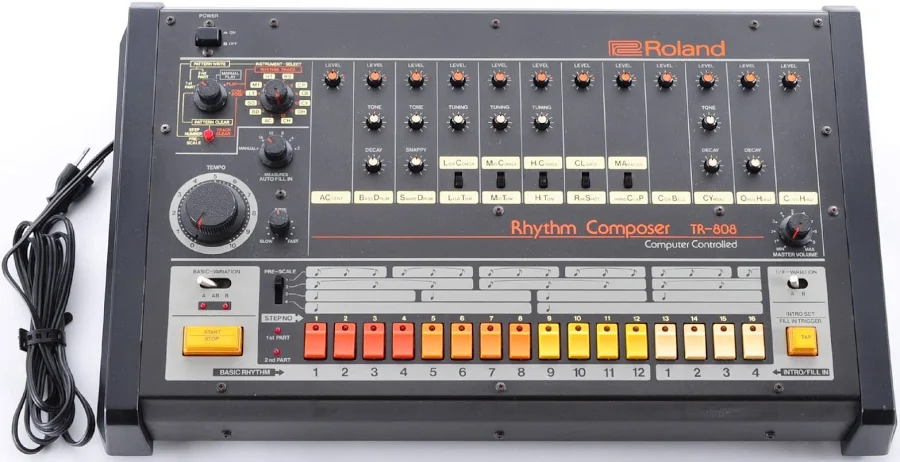
Now consider the Roland TR-808.
In 1980, Roland released a drum machine. TR stood for Transistor Rhythm – a functional description of the technology. 808 was simply the next number in the product sequence. It didn’t sell especially well. Roland discontinued it within a few years and moved on.
But it found its way into the hands of the right people at the right moment. Hip hop producers discovered what it could do with a kick drum. Chicago house music was built around it. In 1988, a group of musicians in Manchester named themselves 808 State – explicitly after the machine – because the number had accumulated so much meaning in the world they were working in that it had become a statement of identity, a declaration of sonic allegiance.
The TR-808 is now one of the most culturally significant pieces of hardware in the history of recorded music. The number 808 is shorthand for an entire era of sound. Most people under 40 know what an 808 is without ever having seen the hardware.
Roland were not trying to make something iconic. They were assigning a production code. The name didn’t make the TR-808. The TR-808 made the name.
And that’s what’s easy to miss. The relationship between a name and a product runs both ways. A good name gives a great product something to travel on. But a great product can also redeem a functional code and transform it into something that outlasts the hardware entirely. What matters is that somewhere in the process, someone made a decision that felt right – and the product delivered on it.
What this means if you’re naming something
If you’re building, branding or specifying a product – even internally, even for a small market – it’s worth stopping and asking what the name actually does.
Does it encode something true? Does it have rhythm when spoken aloud? Can someone say it in a sentence without stumbling? Does it sit in the right part of the culture – familiar enough to feel known, distinct enough to be ownable? Does the number, if there is one, carry any weight of its own – or is it purely arbitrary?
These questions feel soft when there are specs to finalise and lead times to manage. But language is how everything travels. A specification sheet stays on a server. A name gets said out loud, typed into a search bar, written in a message by someone trying to remember what they encountered somewhere, some time ago. If the name gives them nothing to hold onto, they won’t find it. And more importantly, they won’t trust it – because familiarity and trust are built from the same material.
The product has to earn it. But the name has to make room for it.
Four and twenty sailors, said the mice on the mending machine. Four-G, two SIMs, said the router spec. and a GEM of a name.
Sometimes the language is already there, doing quiet work underneath the surface, waiting for you to catch up with what you already instinctively knew.
25+ years in telecoms and IoT. Former founder of ProRoute, Fullband, and Westlake Connect. Currently building IoT connectivity resources and writing about how the industry actually works. On the hunt for truth and common sense.
About This Site
Nick Appleby writes here in a personal capacity. Views, recommendations, and technical guidance are his own and do not represent any employer, partner, or associated organisation.
Content is informational only and does not constitute professional advice. No liability is accepted for actions taken in reliance on it. Always consult your supplier before procuring or deploying products or services.