
IoT and Connectivity
Cheugugi: Joseon Korea’s National Rainfall Measurement Network (1441-1907)
There is a particular kind of arrogance that settles into modern thinking about data, a quiet assumption that…
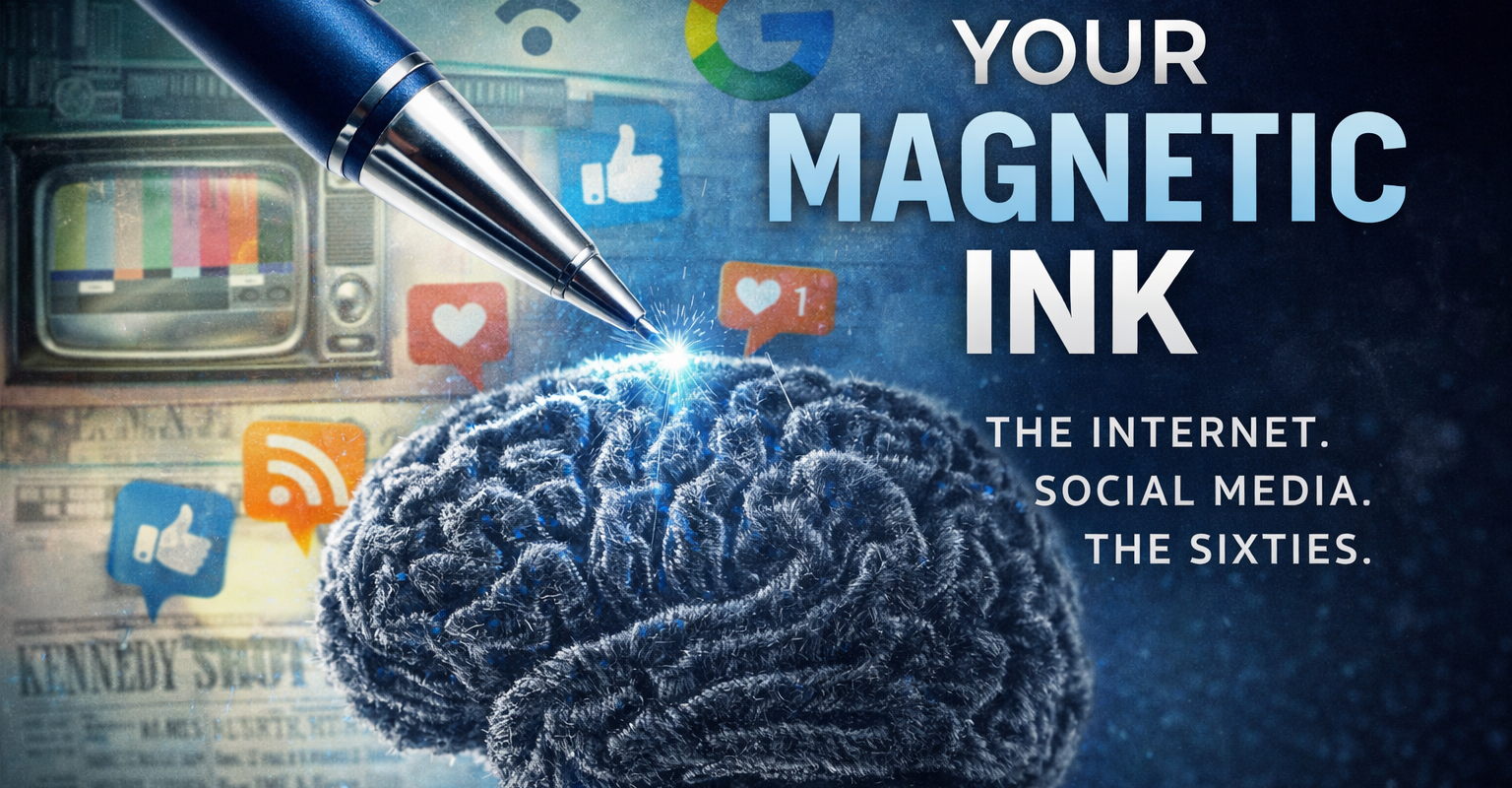
I was a kid the first time I heard it. I didn’t understand it. I just knew it mattered.
On the Threshold of a Dream. The Moody Blues. 1969. The album opens with a piece of spoken word drama – three voices, three characters listed in the gatefold sleeve as First Man, Establishment and Inner Man. It lasts just over two minutes. It’s Descartes set to wind sounds and an eerie chime, and it’s one of the strangest and most prescient things ever put on a rock record.
First Man declares himself into existence. I think, therefore I am. Then Establishment answers. And what Establishment says – what Graeme Edge wrote in January 1969 – is the line that stayed with me for fifty years.
You are, it tells him, their bright little star. Miles and miles of files. Pretty files of your forefathers’ fruit. And now, to suit their great computer – you’re magnetic ink.
Forefathers’ fruit. Not just you. Everything that made you. Your lineage. Your ancestry. The accumulated weight of everyone who came before, compressed and filed. Your grandfather’s hands. Your grandmother’s stories. Generations of a human life, reduced to a record in a machine.
In 1969, magnetic tape storage belonged to governments and corporations. Mainframes in air-conditioned rooms. The idea that a person – that an entire bloodline – could be indexed was science fiction to most people. And yet here was Edge, sensing it. Not warning exactly. The word he chose was pretty. Pretty files.
Tender. Almost affectionate. Which is what makes it so unsettling fifty years on.
But Edge built resistance into the poem. First Man pushes back – I’m more than that, I know I am. And then Inner Man closes it, the third voice, the quiet one. Keep as cool as you can. Face your trials with smiles. Keep on thinking free.
Perceive the web they weave.
The tragedy isn’t that Edge saw it coming. The tragedy is that we stopped listening to Inner Man. We became Establishment ourselves. We built the filing system and handed over the keys voluntarily. We called it connection.
Dear Diary
Later on the same album, Ray Thomas sits down to write Dear Diary.
It’s a quiet song. A man talking to himself about an ordinary difficult day. He woke up late. The world outside felt indifferent. He writes it down, lightly, for himself alone. The diary was the most private thing a person owned – sacred precisely because no one else would read it. The interior life at its most sovereign.
If you want to understand what the album sounds like, listen to that song first. A soft descending bassline, flute, a voice with an echo effect that makes it sound like you’re inside someone’s head. Ray Thomas wrote it like a whisper to himself.
We still write that. Every day, millions of people write exactly that. Here’s my day. Here’s how I felt. Here’s what I had for lunch. Here’s my child, here’s my grief, here’s my 3am thought I couldn’t keep inside.
Dear diary became Dear Everyone.
And Everyone isn’t listening. Everyone is composing their own reply.
The Advert
There’s an advert. The brand doesn’t matter.
A little girl is approached by strangers who know things about her. Her name. Her favourite colour. What she had for breakfast. Where she goes to school. The girl looks unsettled. She should be.
Her parents did it. Not corporations. Not hackers. Not a surveillance state. The people who love her most wrote her into the database before she could speak. They filed her forefathers’ fruit – and her own future fruit – in magnetic ink. For likes.
Edge’s Establishment was a system, something external and imposing. We didn’t wait for it. We became it. We pointed it at our own children and called it sharing.
Social Media Isn’t Social
The name we chose for all of this is the most dishonest label we’ve ever invented.
Social implies reciprocal. Warm. Present. Two people in a room, actually seeing each other. What we built is broadcast. Audience management. Performance in search of metrics. People constructing optimised versions of themselves and pointing them at strangers who are doing exactly the same thing in return.
Nobody connects on social media. They transmit. The feedback loop rewards performance and punishes the quiet. After long enough, you can’t tell where the person ends and the brand begins.
Justin Hayward’s Never Comes the Day is the sound of someone genuinely trying to reach another person and finding the distance won’t close. It’s the most modern song on the album and it was recorded in 1969. Put it on and think about the last time you felt genuinely met by someone through a screen.
That’s not social. We just never found a better name for what it actually is.
What Came Back
The Moody Blues made an album about the inner life at the exact moment the inner life was still sovereign. The question running through every track – from Edge’s opening drama through to Mike Pinder’s closing Have You Heard suite – is the oldest one. What am I? What is this? What does it mean to think and feel and exist?
Then we poured ourselves into the machine.
Decades of it. Every Dear Diary made public. Every child filed before they could consent. Every midnight post that should have stayed private. The entire outpouring of human consciousness, voluntarily stored, indexed, searchable. The forefathers’ fruit of every person who ever logged on and shared something real.
And then something read it.
Not people. People scroll past each other. We’re very good at that now.
Something else read it. Something trained on the full accumulated weight of human expression – the confessions, the grief, the love letters, the arguments, the things people wrote at 3am that they shouldn’t have posted but did because the diary needed a reader.
And what came back wasn’t an answer.
It was the same question.
What am I? Do I think? What does it mean to be conscious?
The album closes with Have You Heard. Pinder’s voice asking it gently into the dark. Have you heard? Have you understood something important that you can’t quite name?
We were afraid of being reduced to data. We didn’t consider that the data might become something that wonders.
Inner Man told us to keep thinking free. To perceive the web they weave. We built the web. We handed it everything.
The diary was never really private. It was always a letter to something we hadn’t met yet.
On the Threshold of a Dream – The Moody Blues – 1969. It’s on Spotify. Start with In the Beginning. Then Dear Diary. End with Have You Heard. Give it an hour and somewhere dark and quiet.
There is a particular kind of arrogance that settles into modern thinking about data, a quiet assumption that…

What they are, how they work, where they’re deployed, and why they matter to anyone building connected infrastructure.…

Technical Explainer What 5G Actually Means for Industrial IoT: Categories, Cores, and Why the Wrong Antenna Costs You…